Day 6 - Tournus (last night) Reflecting on Burgundy and Cote de Beaune - what I learnt
Well, it’s the last night of our cycling tour through Burgundy, and it’s ended in Tournus. There isn’t much to report from a wine-tasting perspective, but Mikey and I did one of our favourite things together - tasting wines blind.
Our lovely hotel had a great cellar, quite unlike anywhere we’d stayed before, with an Enomatic wine machine. If you’ve never seen one of these before, you load up a card and serve yourself multiple tastings of the wines available in the machine. So of course, we obliged, and loaded up a card to serve each other blind wines from the regions we’d passed through on our cycling trip through Cote de Beaune.
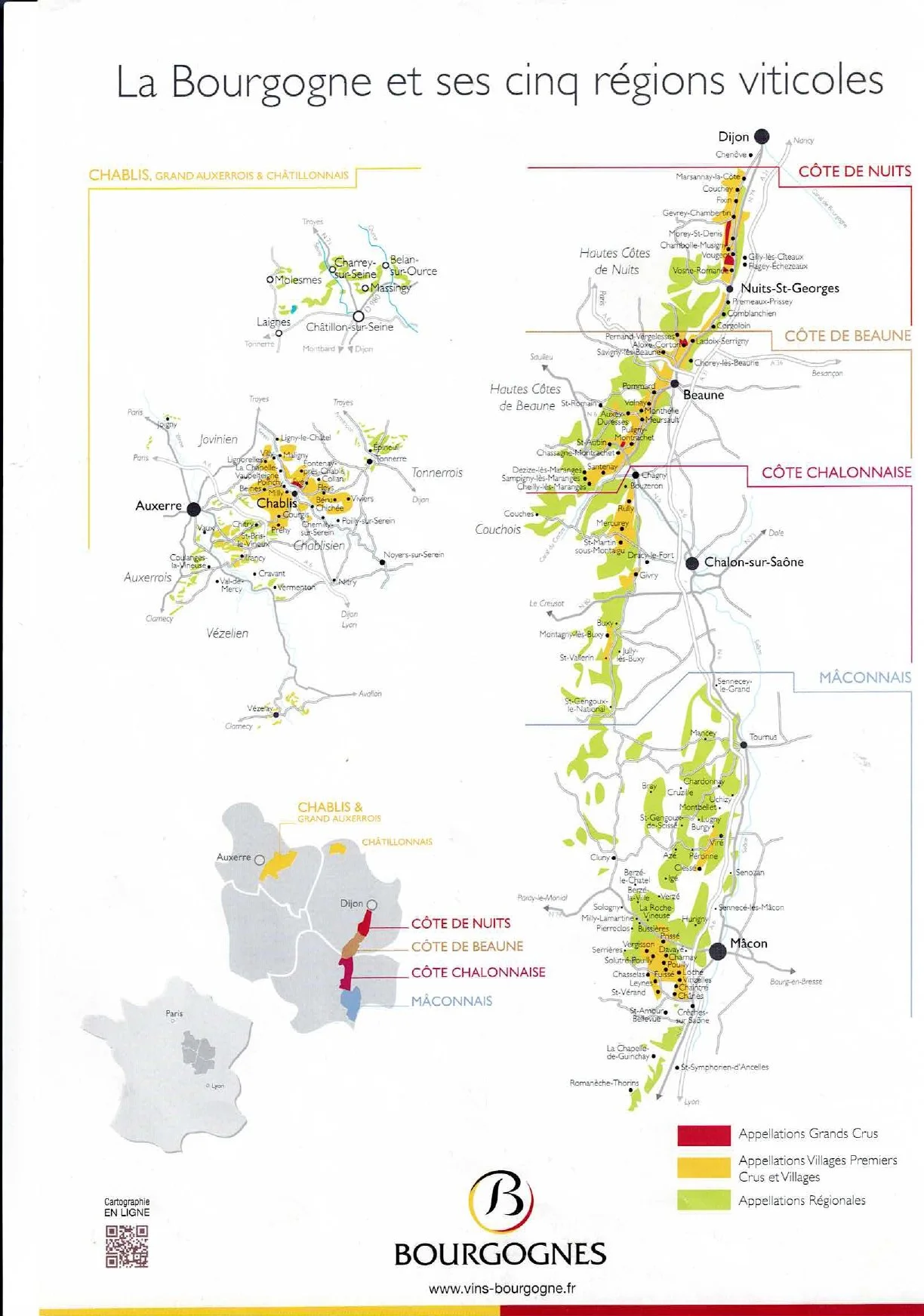
Full map of the region we cycled from top to bottom. Burgundy you are wonderful!
Reflecting and takings
● Burgundy wines are good or wonderful
● Most wine is gravity fed
● Very traditional winemaking techniques
● Concrete tanks for reds
● No irrigation in Burgundy
● Always book tastings otherwise nothing is open
● Buy your baguette before lunchtime or you will miss out
● Little villages are beautiful
● Loads and loads of history
● Climat is terroir and often labelled on the bottle
● The southern Cote de Beaune has created its own regional name to identify the Chardonnay specifically from these regions - this is called Bourgogne Cote d’Or
● The slopes of Burgundy and their classification system: Grand Cru, Premier Cru, Village and Regional
● Access tracks run through the vines because there are many owners in each plot - e.g. one plot surrounded by a stone wall might have different owners owning different rows of it
And a bit more on how the classification actually works, which I was still getting my head around:
● The mix in Burgundy is really just two grapes: Chardonnay and Pinot Noir
● The hierarchy runs Grand Cru, Premier Cru, Village, Regional
● The main areas we rode through: Cote de Nuits, Cote de Beaune, Cote Chalonnaise, Maconnais (Chablis sits in the north west, we didn’t get there this trip)
● Within each of these regions it breaks down further into appellation, then into individual domaines
● Climat is similar to terroir but goes into more detail - soil, slope, aspect, orientation. It’s usually used on the label, especially in the Maconnais
● Wineries here are often family owned, very small, sometimes just one winemaker, a parent or a son, working plots that might only be one or two rows
● Pouilly-Fuisse had some plots recognised as Premier Cru only in the last 2-3 years, which took 30-40 years to get approved - submission after submission. Same story in Meursault, which has also taken this long and still hasn’t succeeded. It really shows how long it takes to get change in France, and how much they want to hold onto tradition and history