
Champagne Bollinger, Aÿ · Tuesday 6 October 2026
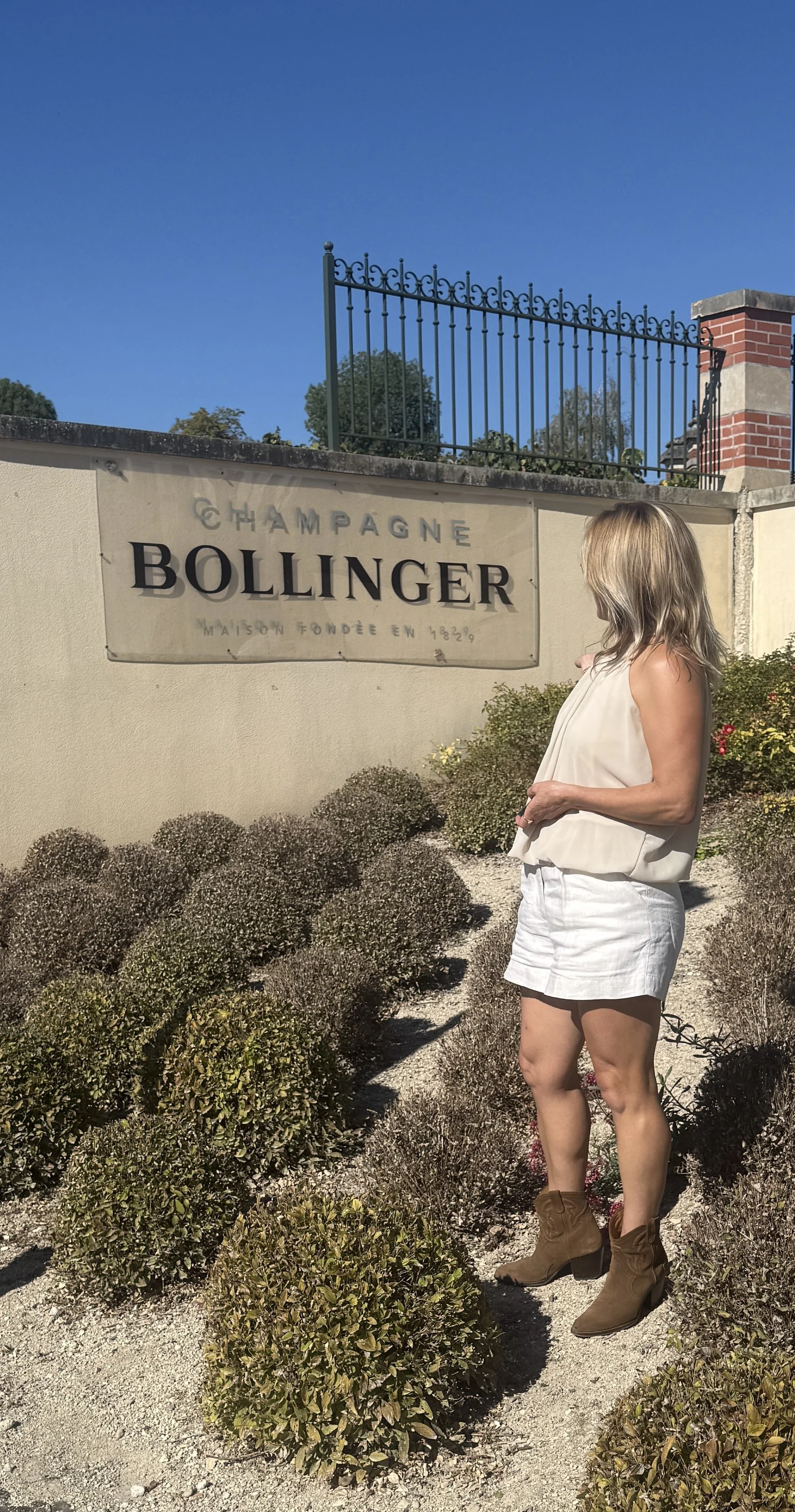
Walking in under the gold Champagne Bollinger lettering felt very posh and a little bit special, and I kept thinking how lucky I am to be here. I'd booked the Pinot Noir masterclass, which is all about the grape at the heart of the Bollinger style, and it turned into one of the most technical mornings of the whole trip, the kind where you come out with a head full of notes and want to go straight back in.
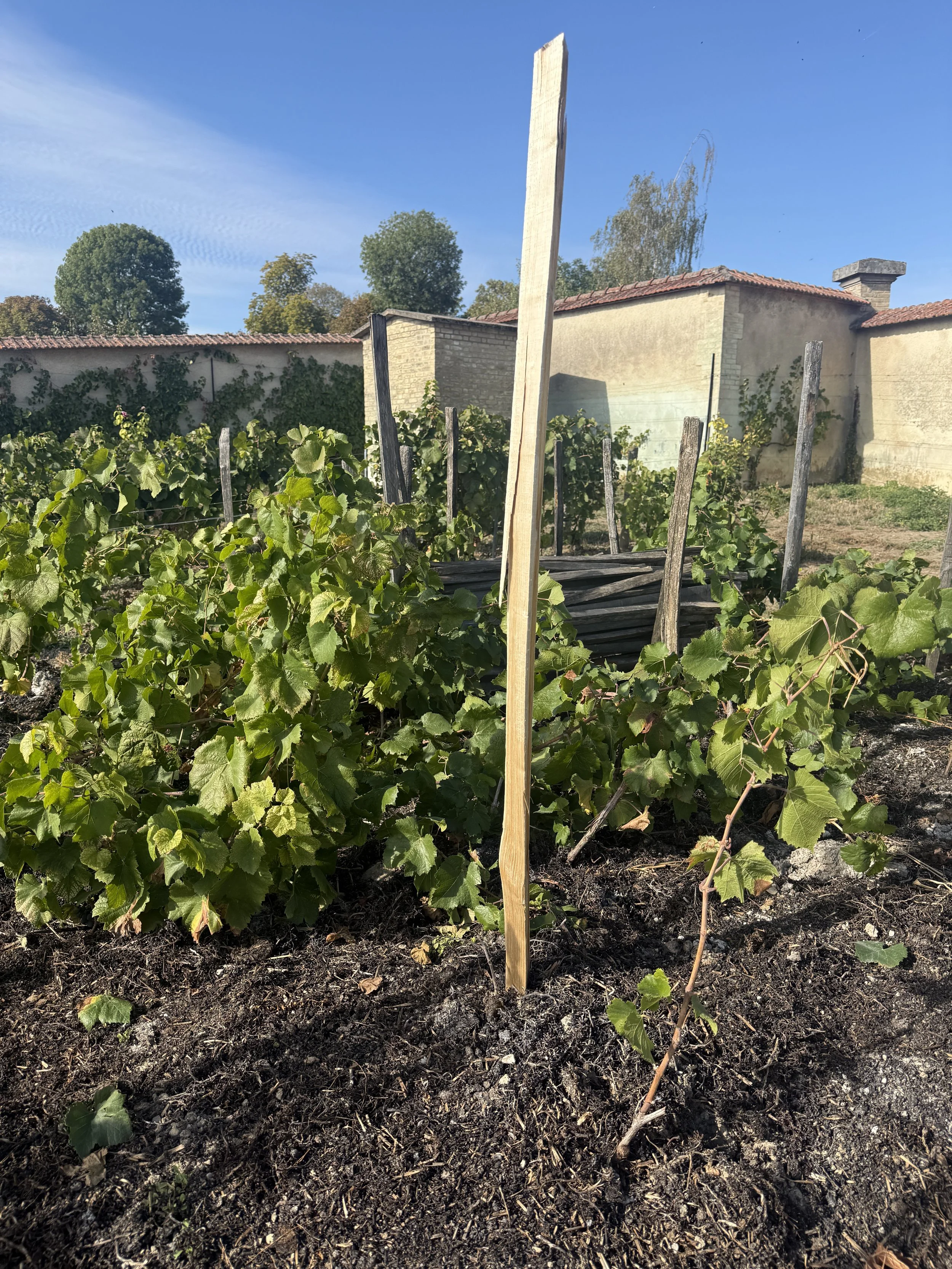
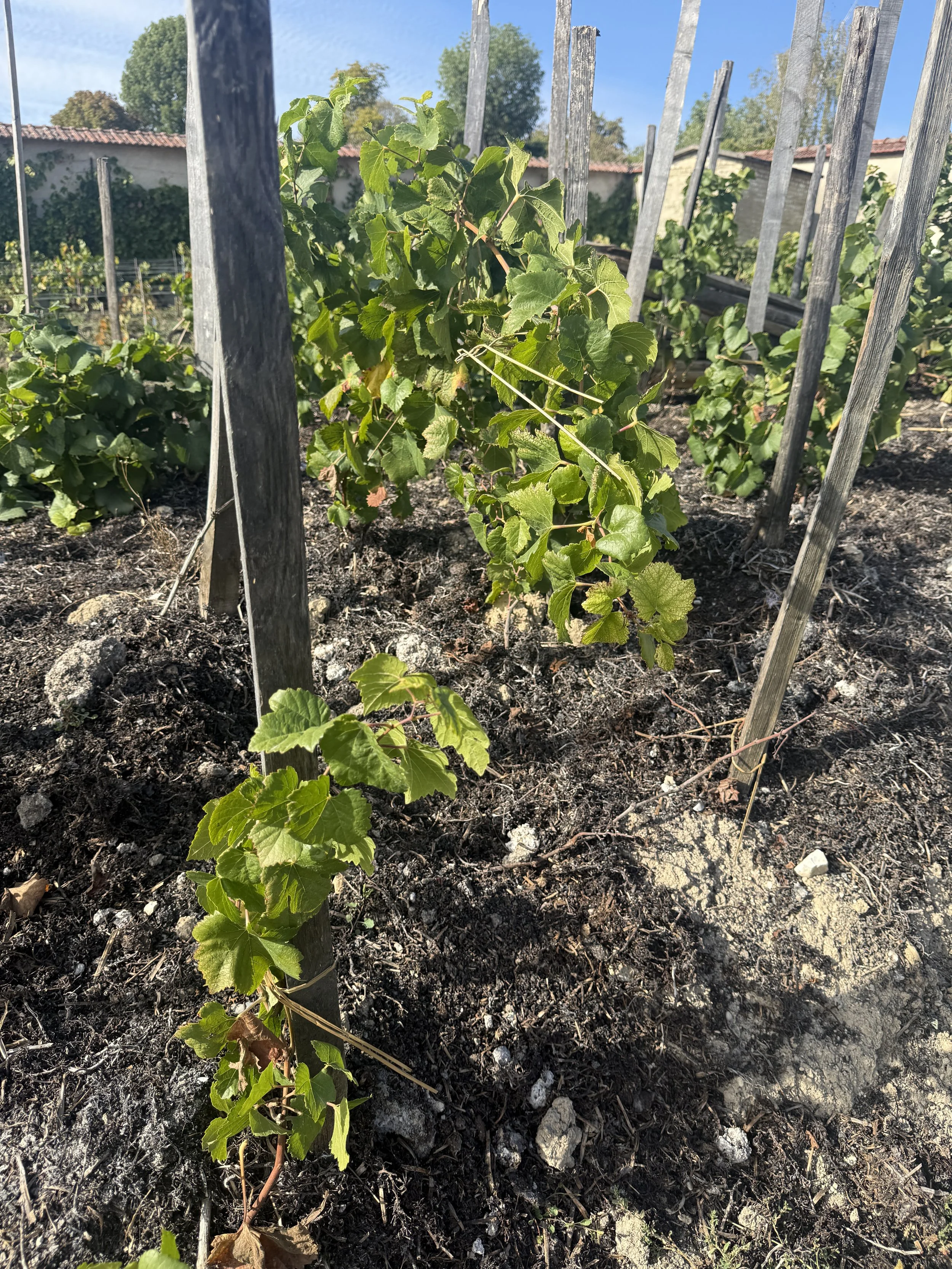
We started in the vineyard behind the walls, and this is where it got interesting straight away. These are ungrafted Pinot Noir vines, the Vieilles Vignes Françaises, planted the way all of Champagne was planted before phylloxera came through. There are no rows. The vines grow “en foule”, in a crowd, and when one dies they bend a cane from its neighbour down into the soil and let it root, so the new vines are grown from the old ones. You can see a fresh wooden stake marking each baby tucked in among the old twisted ones. Before phylloxera, Champagne was planted at more than 25,000 vines a hectare like this. Today the rows sit at around 8,000, which gives four times more fruit for four times less work.
Ungrafted vines like these can only be kept inside the walls of the two clos, so that phylloxera can't get out and spread. Bollinger used to have three of these clos. Phylloxera got into the third one in Bouzy and it had to be pulled out and replanted on grafted rootstock, so the two left here in Aÿ are precious, and the plan for keeping them safe comes down to a lot of crossed fingers. There's a newer worry too, flavescence dorée, a disease carried by a tiny leafhopper. By the time a vine shows it, it's already too late, and because the vineyards here are a mosaic of small parcels scattered all over the place, a worker can walk through an infected plot in the morning and carry it to ten others by lunchtime without knowing. They're talking about shoe covers for visitors, which made me think of New Zealand and the biosecurity check at the airport, and I'll be walking through that myself in ten days.
This year has been a wild one in Champagne. February hit 16 degrees and woke the vines far too early, then a minus four frost in March burned about 40% of the crop. After that there was no rain from May, so the bunches were tiny and some grapes in the south were almost raisins by picking. Bollinger started harvest on 13 August, the earliest they have ever picked, just 63 days after flowering when it used to be closer to 100. Not much fruit, but the quality is there, concentrated and very fruity.
What stopped me in my tracks was what happens to the fruit from the clos. Each one is picked and pressed on its own in a tiny 2,000 kilo press, and nothing is ever mixed, not the grape, not the village, not the grower. If the year is good enough it becomes Vieilles Vignes Françaises, one of the rarest Champagnes there is. If it isn't, that juice goes into the other blends, which means a glass of Bollinger Special Cuvée can carry a few drops from those ungrafted vines. I love that.
Then we went into the barrel room, and Bollinger is unusual in Champagne because so much of its wine is fermented in oak. The barrels come from Burgundy, where they've spent about five years making white wine, because the Bollinger family also owns a domaine in Beaune. They still sterilise them the old way too, by burning a sulphur wick inside the empty barrel, which uses up the oxygen so nothing can grow. Only the cuvée, the first and purest pressing, goes into barrel, because the tiny amount of oxygen that comes through the wood needs a wine with real strength behind it. That's also why there's no Meunier in the barrels. It matures quickly, and Bollinger's vintage wines are built to age for six, ten, fourteen years and more. They even have their own cooper, the only house in Champagne that does, and he repairs about 10% of the barrels every year using staves from old barrels, because every barrel is unique and a new piece would never fit. Most barrels are kept for 35 to 40 years.
Down in the cellars, past the old riddling racks with bottles sitting neck down in the dark, is where my brain really got a workout, because this is where the blending happens and I asked a lot of questions. Bollinger keeps its reserve wines in magnums under cork, and to stop them oxidising they add a little sugar and yeast at bottling so the wine goes through a gentle prise de mousse, the second fermentation. It only builds about 1.5 bars of pressure instead of the usual six, but it's enough to protect the wine and let it age on its lees for seven to fifteen years, when reserve wine in a tank would only last about five. Every one of those magnums is opened by hand when it's time to blend.
Those magnums are the secret behind Special Cuvée. The aim is for it to taste the same every year, so every year the recipe is different to get there. About 55% of it is reserve wine, including 5 to 10% from the magnums, which means even the non-vintage has wine in it that's more than ten years old. Then it spends three years on its lees, when the rule is fifteen months. Once that clicked, the richness in a glass of Bollinger made complete sense.
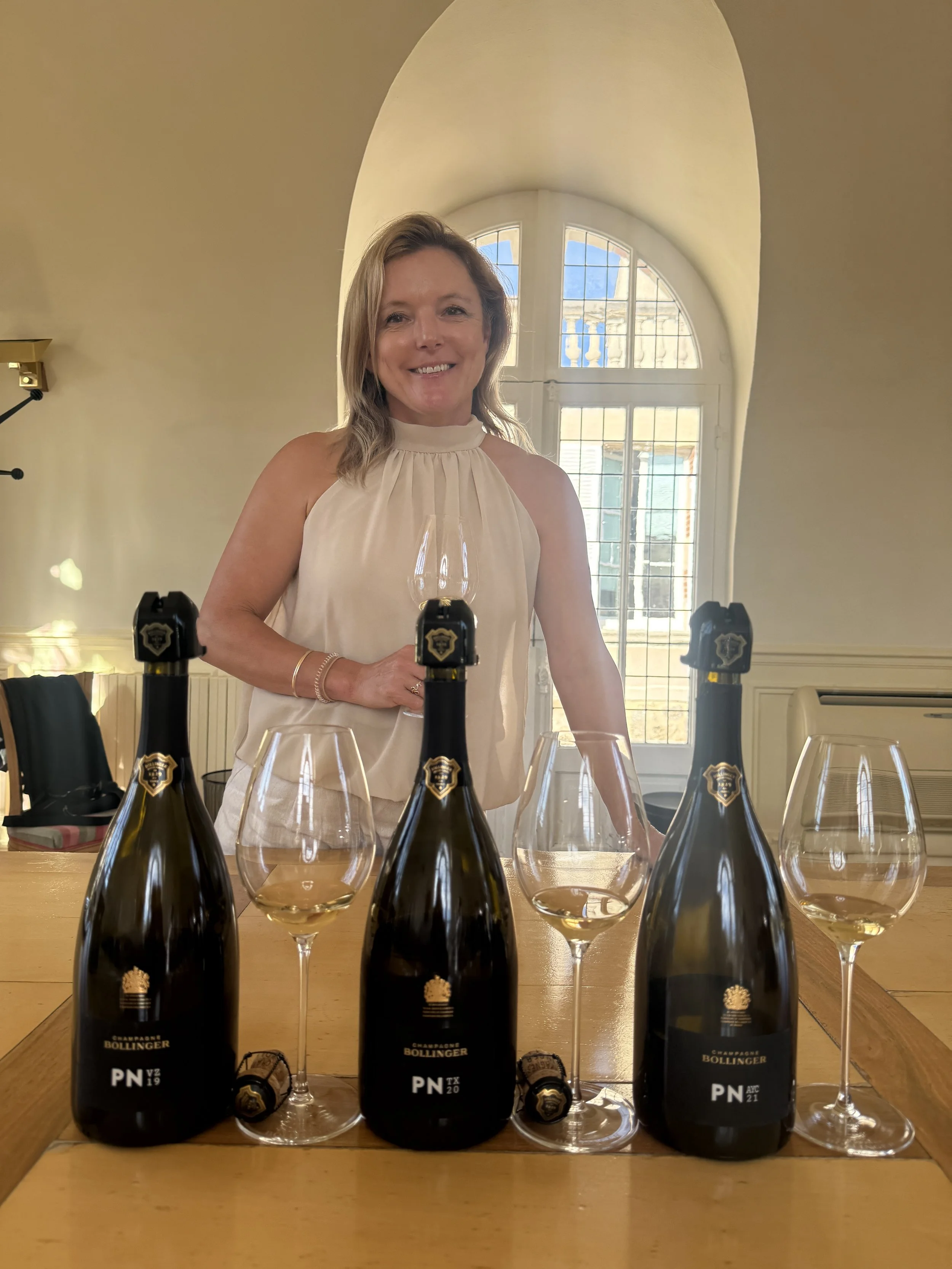
PN flips all of that on its head. It still uses reserve wines, but not for consistency. They're there for complexity and balance, which took me a few goes to get my head around after an hour of hearing that reserve wines are all about keeping things the same. Each PN is 100% Pinot Noir and shows off one village, VZ for Verzenay, TX for Tauxières and AYC for Aÿ, with the number telling you the base year. The TX17, for example, had a little Aÿ, Verzenay and Mareuil added to balance the Tauxières.
We tasted the PN VZ19, the PN TX20 and the PN AYC21 side by side, sitting under that beautiful stained glass window with the light pouring in. The AYC21 was my favourite, well balanced and the kind of wine that will age extremely well. It felt right that the one from Aÿ, Bollinger's home village, was the one I kept going back to.
One last thing I'll take home with me is the hand disgorging. It takes six to eight months of training to open a bottle by hand without losing the wine or the bottle, and once the sediment shoots out they put a finger over the neck and smell every single bottle for faults before it goes any further. Every magnum and every vintage wine is disgorged this way. There's a lot of time and a lot of hands in every bottle here, and I don't think I'll ever pour a glass of Bollinger again without thinking about those few drops from the old vines.