Cote Rotie to Hermitage: my first taste of the Northern Rhone
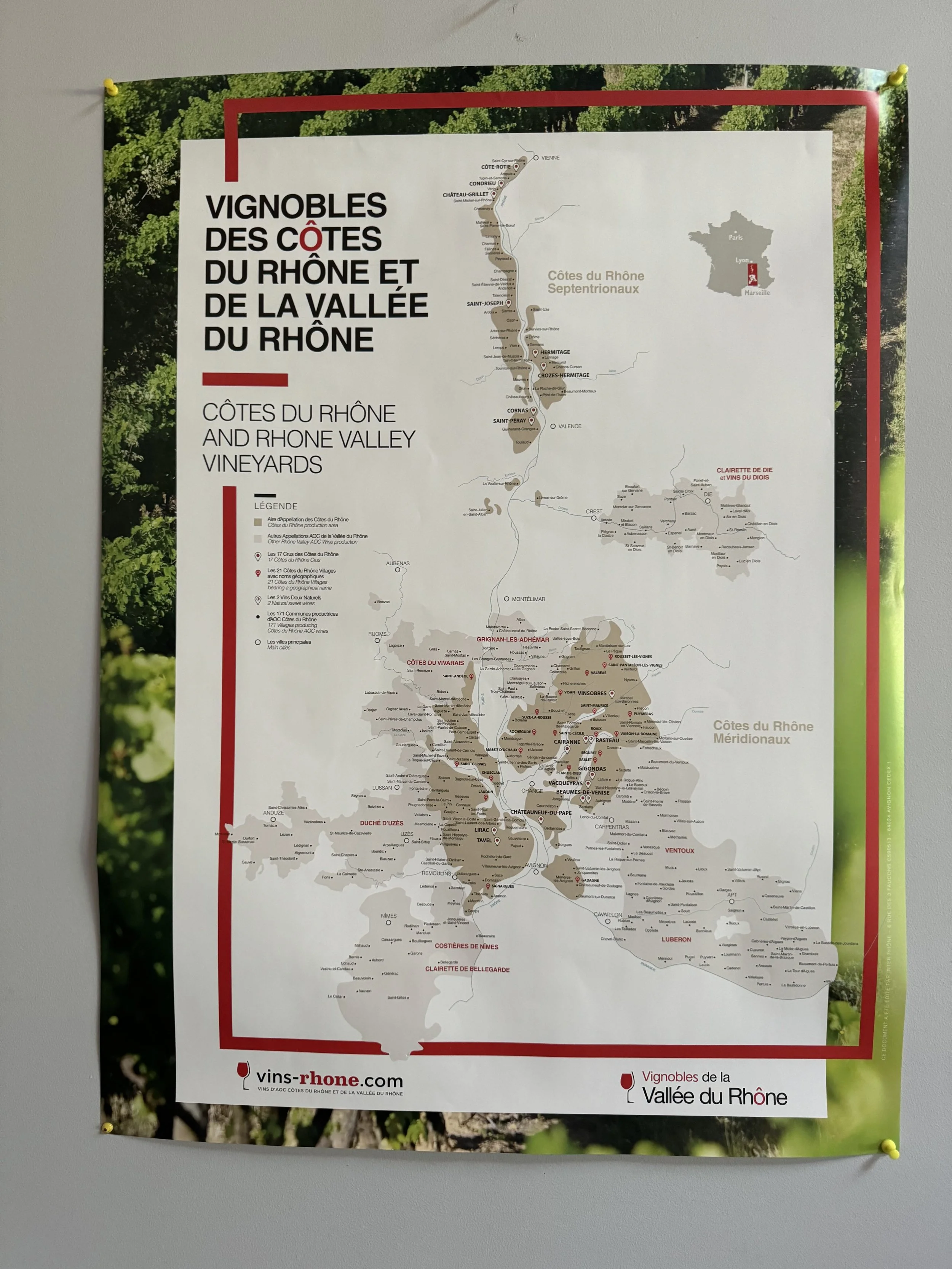
We crossed into the Rhone Valley at Cote Rotie, with the river on our left and some of the steepest, most dramatic slopes I have ever seen on our right. Such a different feeling to Cote de Beaune, with its rolling, gentle hills.
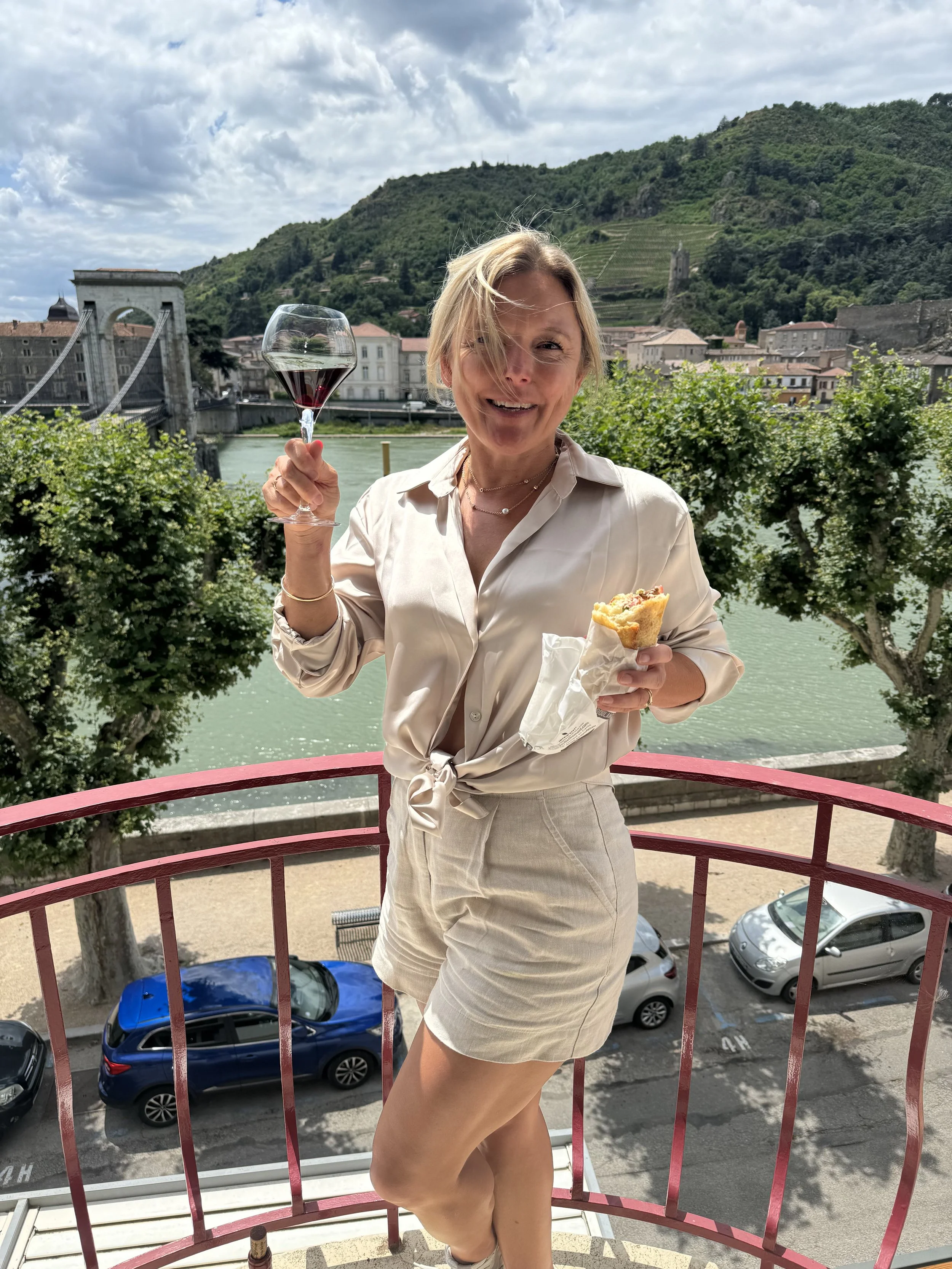
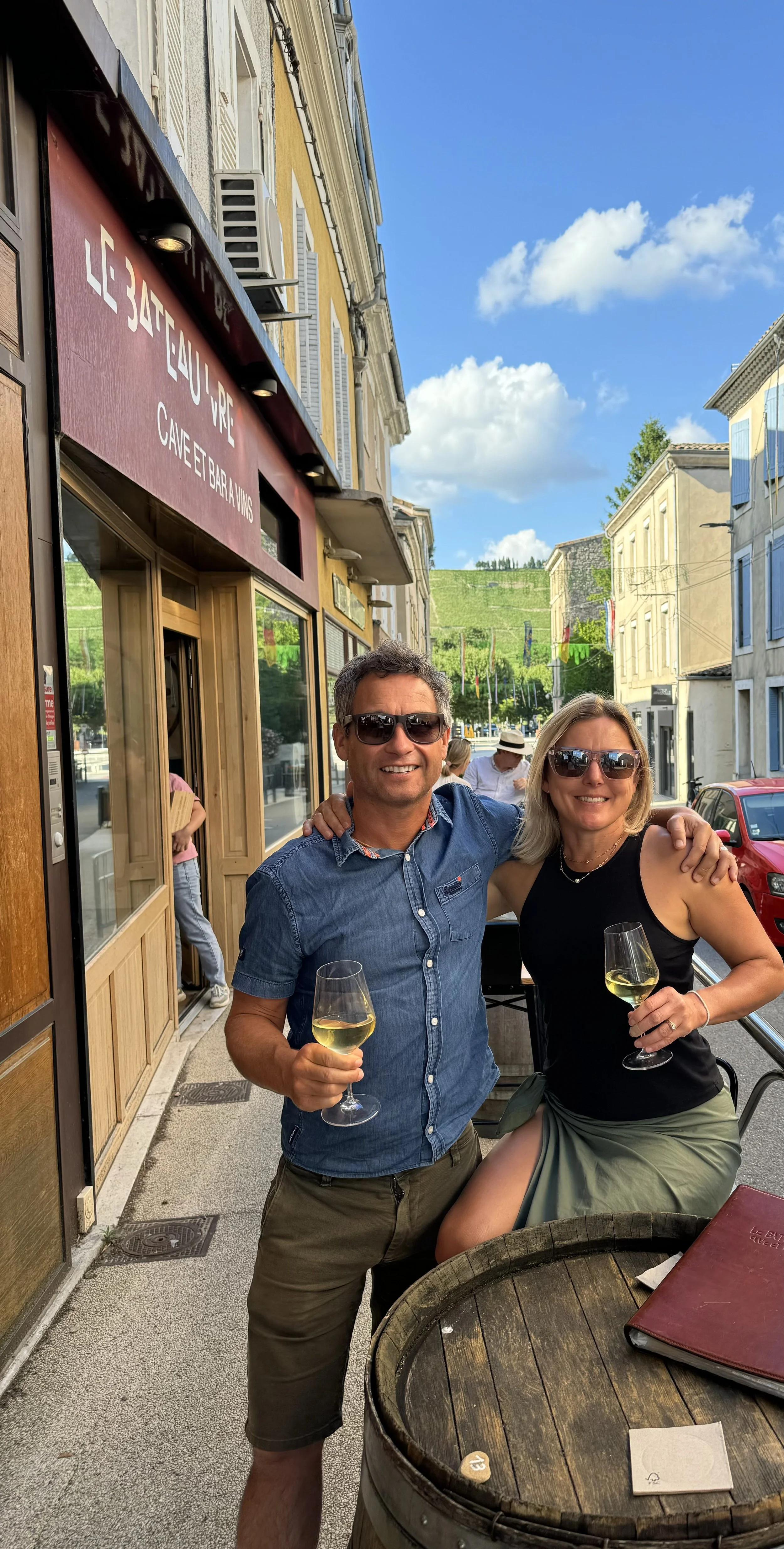
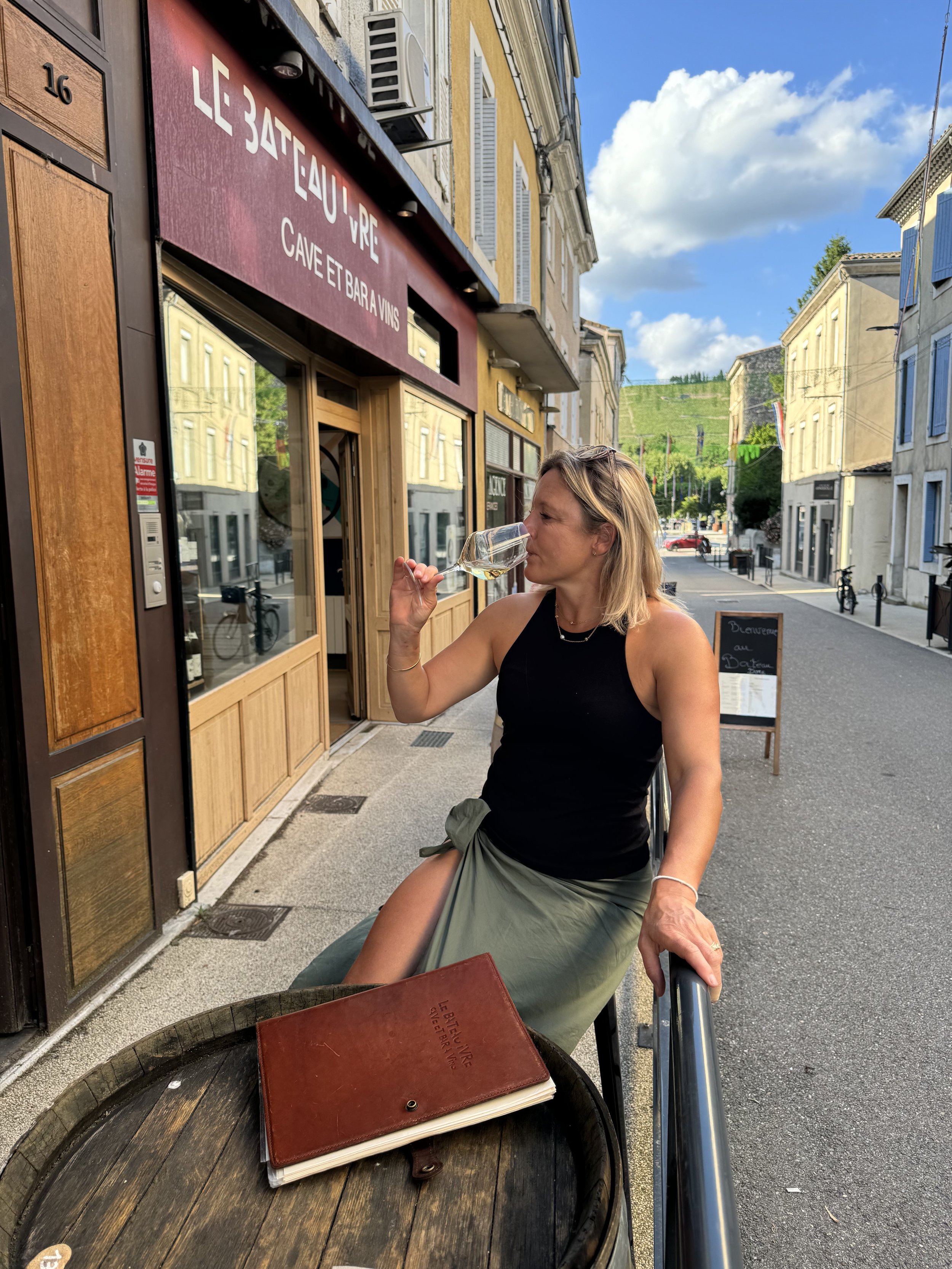
We searched and searched for a boulangerie and came up empty, so we ducked into a cute little bar instead, Bar le 86, and ended up having a proper laugh in french glasses and hats, drinking local beer and wine and watching the Tour de France.
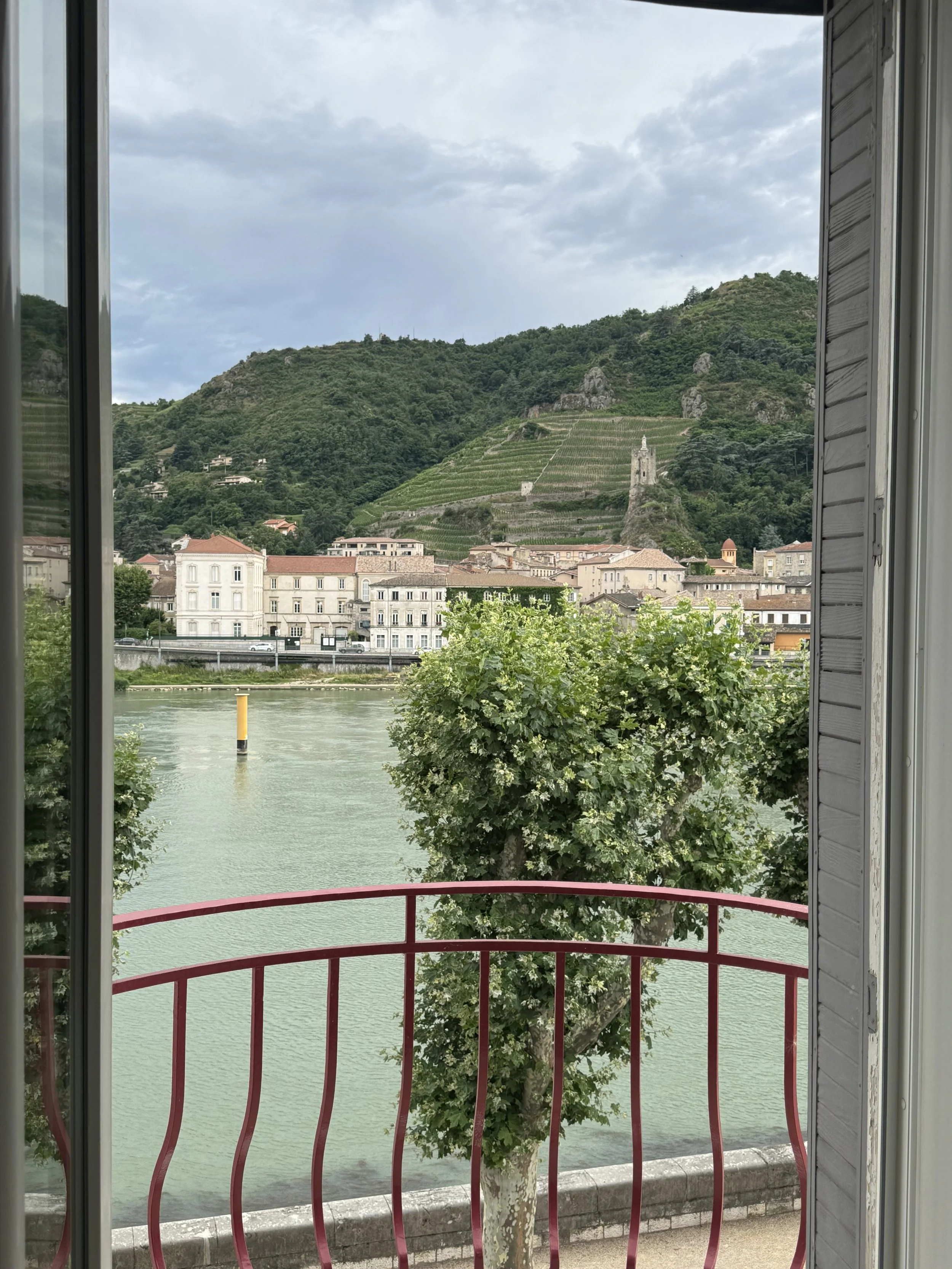
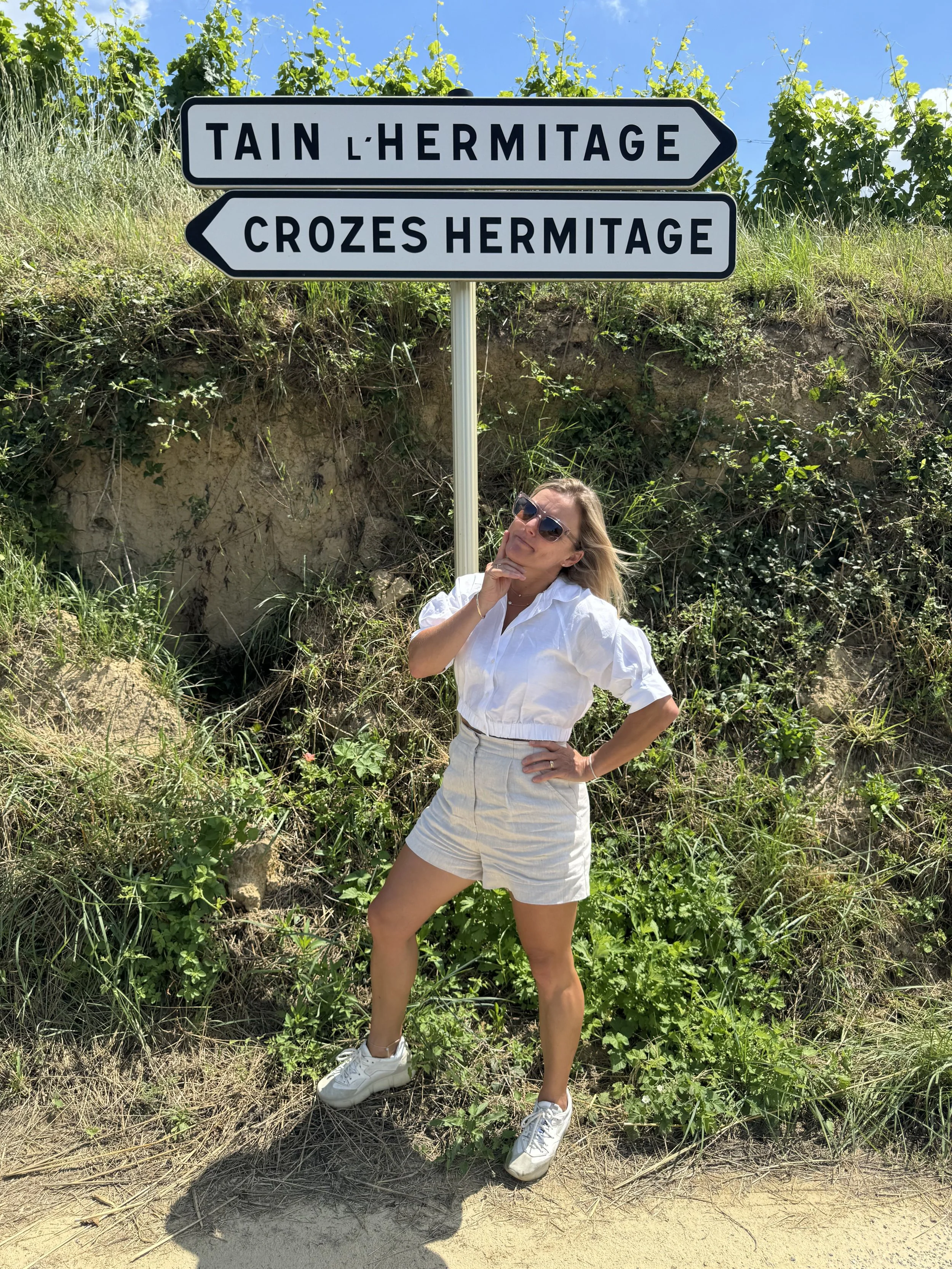
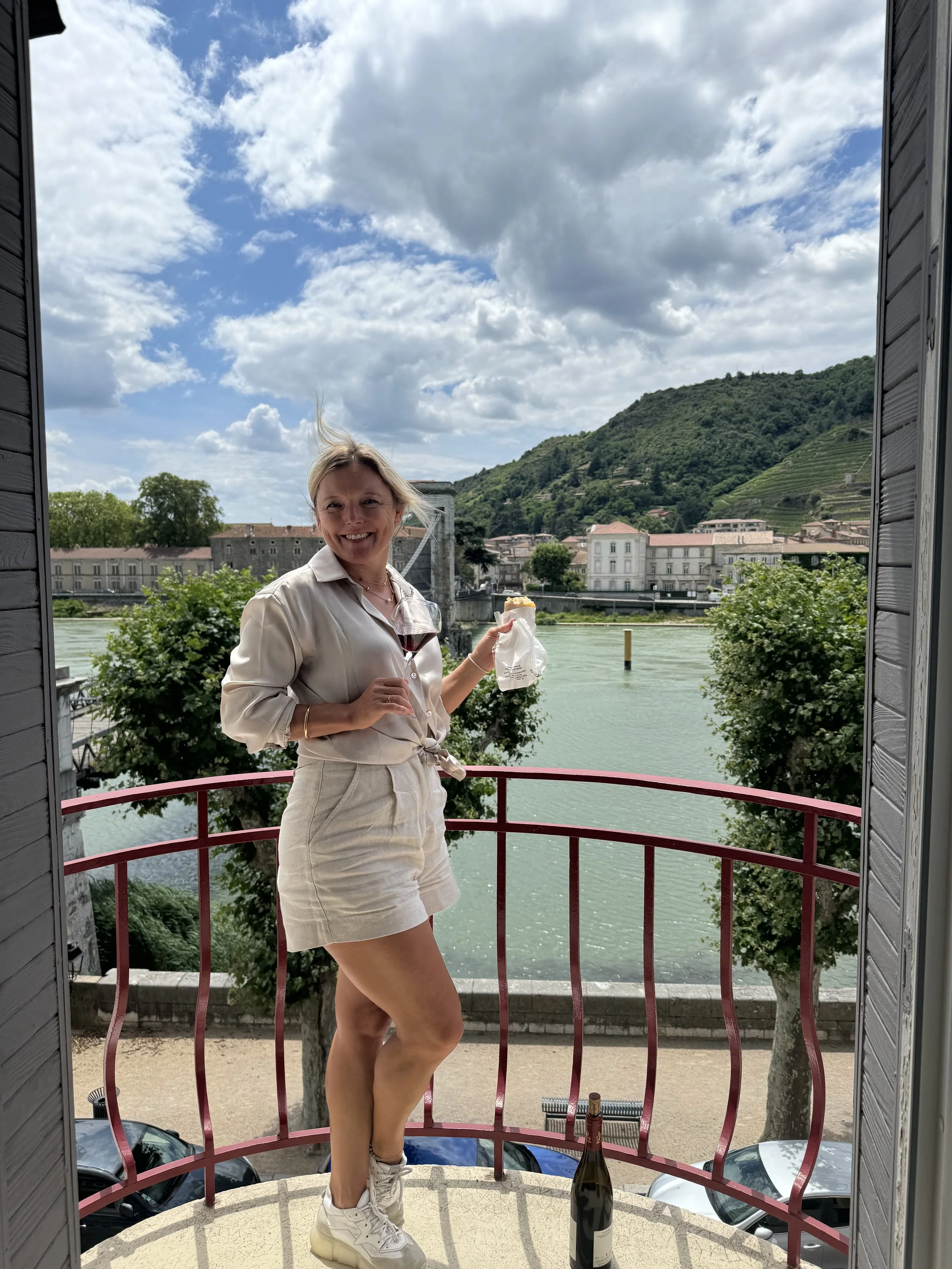
Arriving in Hermitage was just as romantic and dramatic as Cote Rotie but in its own way, with that famous hill rising up. The steep slopes were incredible, and honestly the work that goes into those vines must be brutally hard but so rewarding.
Look, before this trip I could not have told you the difference between a Cote Rotie and a Cornas, so here is what I picked up about the north.
The four varieties of the north
The Northern Rhone really only works with four varieties: Viognier, Marsanne, Roussanne and Syrah, and every appellation up here has its own strict rules about which ones you are allowed to use.
Cote Rotie is red, with a splash of Viognier allowed, up to 20%. Condrieu is white only, and only Viognier. Chateau-Grillet is white only too, just one hectare of vines and one winemaker, and again only Viognier.
Moving south it all becomes Syrah, or Marsanne and Roussanne. Saint-Peray makes white and sparkling wine from Marsanne and Roussanne. Hermitage and Crozes-Hermitage are Syrah for the reds and Marsanne and Roussanne for the whites, nothing else. Cornas is red Syrah only. Saint Joseph and the surrounding domaines grow only Syrah.